
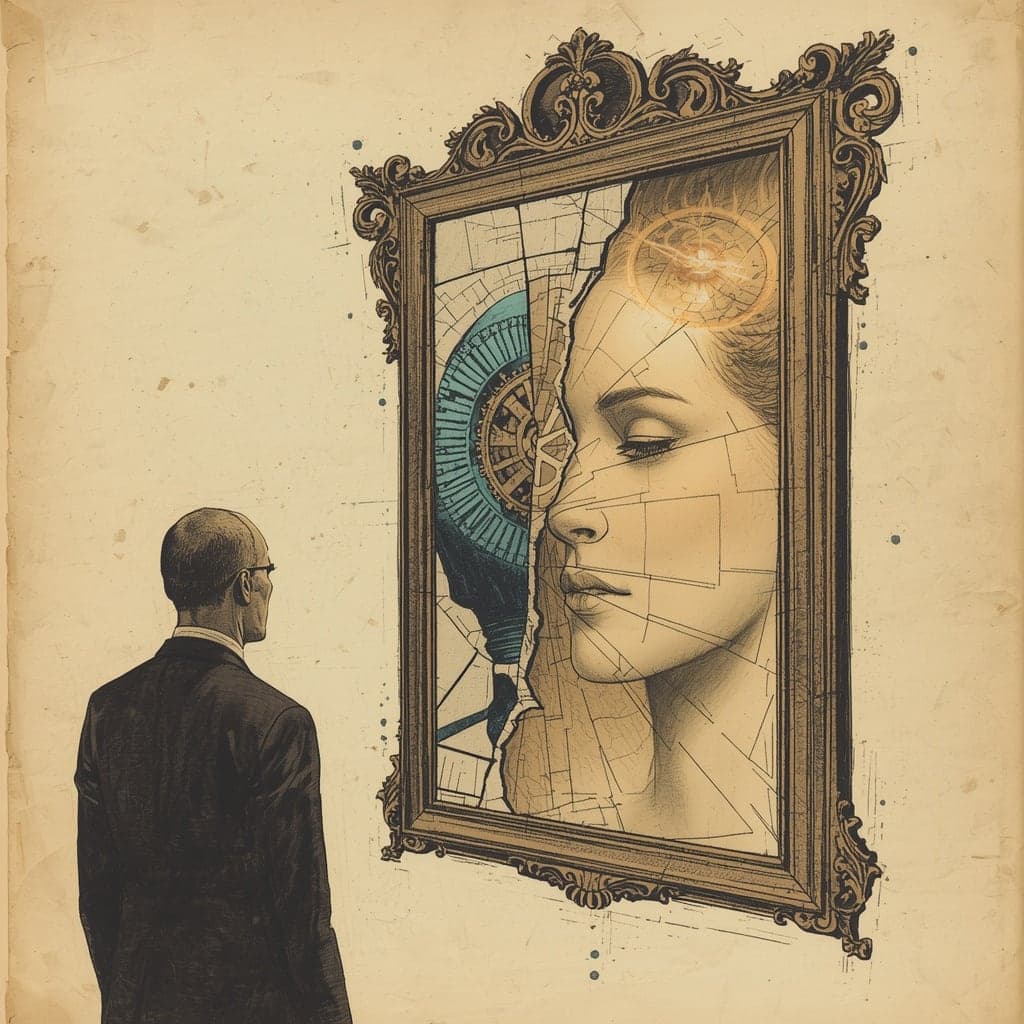
In order for this cross-fertilization between faith and science to take place, the speaker rescues from Fides et Ratio two cardinal dimensions, beginning its scrutiny with the subjective dimension. This aspect directly concerns the moral and intellectual purification of the clinician or researcher himself. As an infused theological virtue, faith works an invaluable interior wonder: it frees scientific reason from presumption. Dr. Verdier warns with prophetic success that psychiatrists, psychologists and men of science find themselves extremely easily exposed to the arrogant temptation of believing that their mathematical or psychodynamic models exhaust the mystery of the person. Only through the Christian virtue of humility does the therapist purify his vision and acquire the intellectual audacity to investigate profound clinical phenomena that official science censures for ideological cowardice. The speaker exemplifies this scientific courage by mentioning the clinical study of the serious psychopathological consequences of procured abortion: it has been Catholic psychiatrists and therapists who have had the courage to look squarely at the post-abortion syndrome and the moral tear of prenatal genocide, while secular psychiatry, enslaved by the dogmas of the culture of death, stubbornly refuses to catalog this internal devastation.
As an unavoidable corollary of this first great epistemological diagnosis, it is necessary to amplify the speaker's prophetic cry regarding the dire state of the modern Catholic university, twenty-five years after the apostolic constitution Ex Corde Ecclesiae. The question posed by Dr. Verdier is lapidary: if we summoned one hundred graduates or doctors in psychology who graduated from universities that have the title of Catholic and questioned them about what concept of their discipline has been illuminated or enriched by divine Revelation, we would obtain a stony silence in response. After having visited seven universities as a student, resident or professor, the speaker certifies the practical non-existence of true cloisters where a substantial integration between classical philosophy, moral theology and clinical psychology is verified. Worse still, when the deans and professors themselves are questioned about this duty of synthesis, the general response is the most absolute incomprehension: it is assumed as an indisputable dogma of modernity that the psychologist must limit himself to clinical empirical knowledge and the philosopher to his ancient books, in a consummated epistemological divorce that condemns students to receive a mutilated anthropology.
The modern university has lost its primary reason for being because it has extirpated wisdom from its core. We have allowed the sanctuaries of knowledge to degenerate into simple technocratic factories for issuing titles and professional licenses, where future psychiatrists and psychologists are trained in the instrumental skill of prescribing molecules or applying psychometric questionnaires, lacking the moral compass to discern what the human person truly is. It is in the face of this academic ruin that our Santa Jacinta Publishing House raises its voice today, assuming the commitment to continue this thorough examination in the Second Part of our special, where we will address the objective dimension of the contents: the four non-negotiable ontological pillars (the spiritual soul, human freedom, the metaphysics of nature and the concept of the person), the teaching of Pius XII and the refutation of the false consolation of sin in the office.
Legal Note: This critical analysis is carried out under the protection of Art. 28 (news of general interest) and Art. 10 (right of citation) of Law 11,723 on Intellectual Property of the Argentine Republic. The original work and its title belong to its respective author and publication medium, cited on this page.