
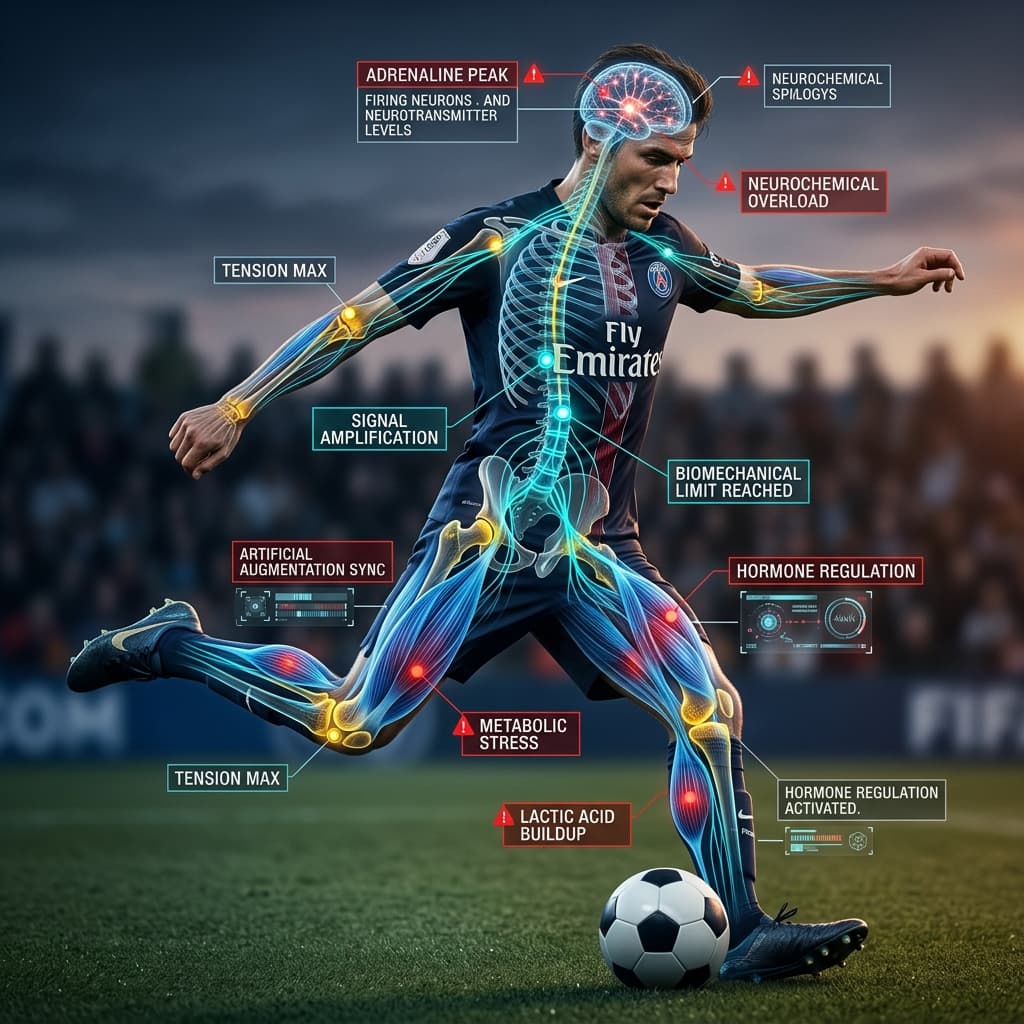
The current world soccer tournament, held in 2026, offers an unprecedented sociological and physiological laboratory for the analysis of the human condition. Beyond the superficial spectacle that captivates the masses, lies a biological and neurological architecture that is systematically ignored by the media establishment. From the perspective of classical realism and empirical science, it is imperative to deconstruct the phenomenon of mass fanaticism and analyze the biomechanical limits to which athletes are subjected in the era of hyper-competitiveness.
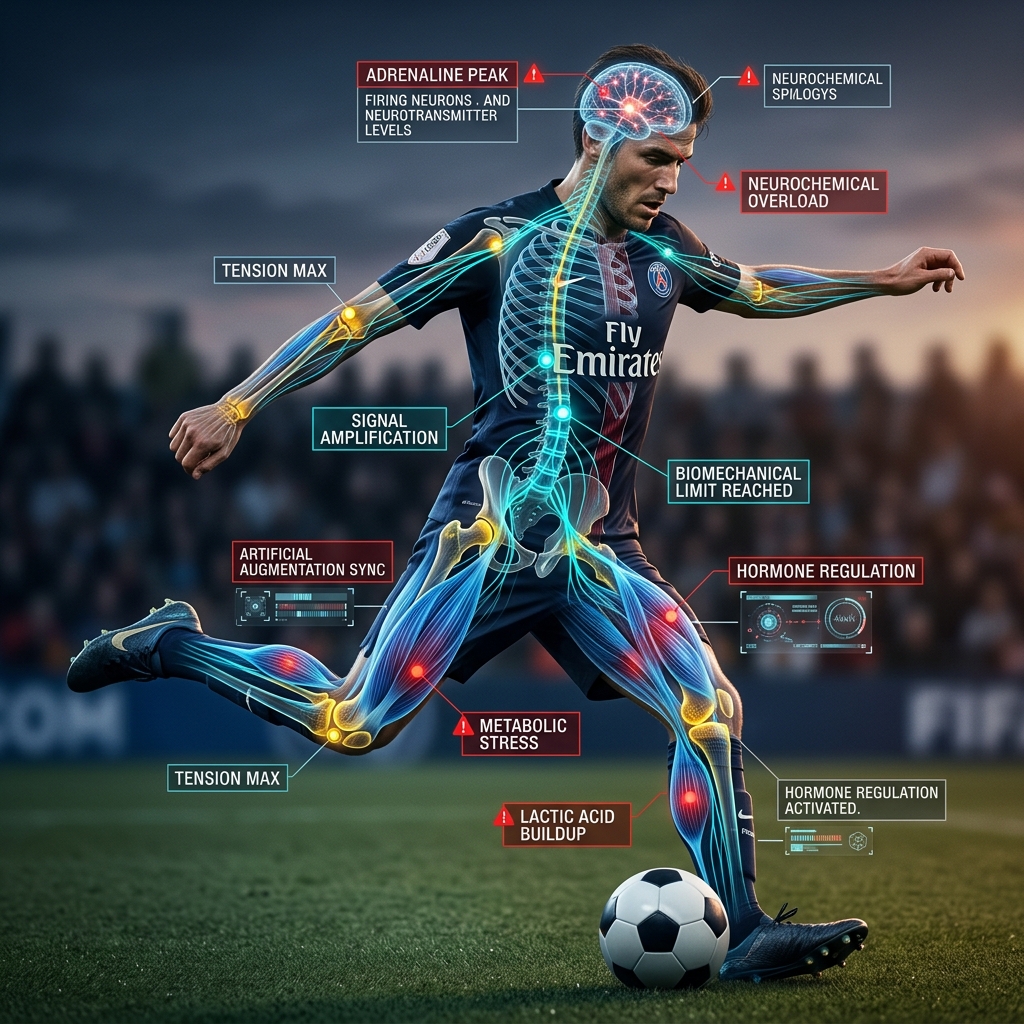
1. The Neurochemistry of Collective Alienation
Mass psychology, observed through the prism of contemporary neuroscience, reveals that the behavior of the "fan" or fanatic is not merely a cultural expression, but a neurochemical hijacking of rational faculties. During a high-tension sporting event (such as an upcoming quarterfinal clash), the spectator's limbic system experiences an overload of neurotransmitters.
The brain's amygdala, responsible for processing fear and reward, reacts to the visual and auditory stimuli of the stadium (or broadcast) by releasing bursts of dopamine and cortisol. This phenomenon functionally overrides the prefrontal cortex, the biological seat of logical deliberation and rational will.
As Le Bon (1895) well documented in his early observations on masses—observations today validated by fMRI (functional magnetic resonance imaging)—the individual loses his critical capacity when integrated into the mass. However, modern scientific reductionism attempts to explain this as a mere tribal "evolutionary advantage", ignoring that this suspension of intellect degrades man's rational nature, reducing him to his lower sensory appetites (Aristotle, De Anima).
2. The Biomechanical Limit and the Transhumanist Mirage
The 2026 tournament also exposes the contemporary obsession with surpassing physiological limits. Current training regimens operate on the verge of fracture of the musculoskeletal system and collapse of the cardiovascular system.
The human body has insurmountable thermodynamic and biomechanical thresholds. Maximum oxygen consumption (VO2 max) and the regeneration capacity of muscle tissue have boundaries dictated by genetics and cellular physics. When sports corporations and biomedical institutions push athletes beyond these limits through “legal” pharmacological interventions (or extreme recovery therapies), they engage in a purely mechanistic view of the human being.
The athlete is observed not as a substantial being, but as an optimizeable meat machine. This premise is the biological germ of the fallacious transhumanist project. The denial of human nature and its inherent limits inevitably leads to the reification of the subject (Kass, 2003).
3. The Fallacy of Sports as the Supreme End
From the perspective of objective psychiatry, the hyper-fixation of millions of individuals on the outcome of a game reflects a systemic existential void. Freudian psychoanalysis would try, erroneously, to categorize this fanaticism as a sublimation of repressed impulses. However, cognitive neuroscience demonstrates that this is Pavlovian conditioning on a global scale.
Supranational infrastructures use this conditioning to modulate the mood of populations, administering victories and defeats like dosers of synthetic serotonin. The rational man, endowed with intellect, should not subordinate his peace of mind and his critical faculties to a neurochemical pendulum controlled by third parties.
Conclusion
The 2026 World Cup, far from being the apotheosis of the human spirit, is an empirical demonstration of how the renunciation of intellect and the reduction of man to pure biology alter the natural order. Genuine science should serve to illuminate these mechanisms, not to perfect the manipulation of the masses. The irrational exaltation and reification of the physical body are symptoms of a blind empiricism that has forgotten the rational dignity of the human species.
APA References: